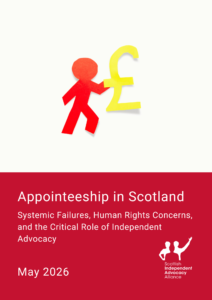
 We all want to be able to live our lives with dignity, make choices about how we spend our money, and take part in the things that matter to us. For people with learning disabilities and autistic people in Scotland, that should be no different. But a new briefing from the Scottish Independent Advocacy Alliance (SIAA), Appointeeships in Scotland, shows that, for too many people, the system meant to support their financial wellbeing is instead getting in the way.
Appointeeship is the legal arrangement that allows someone to manage another person’s social security benefits when they need support to do so. Used well, it is a practical, person-centred tool that helps people access the money they are entitled to. The problem is that, in too many parts of Scotland, it is not being used well.
SIAA has gathered evidence from independent advocacy organisations working across around a third of Scotland’s local authority areas. What they found is a system shaped more by institutional convenience than by the needs of the people it serves. In one case, a person who wanted to open a bank account and take greater control of their finances found themselves in an impossible loop, with neither the local authority nor the bank willing to take responsibility for helping them move forward. In another, a woman had been living on a small allowance while over £20,000 of her own money quietly accumulated in an account she did not know existed, leaving her at risk of losing benefit entitlement she had done nothing to forfeit.
These examples from advocacy partner’s lives reflect patterns that independent advocacy organisations are seeing repeatedly: a lack of financial transparency, no clear accountability when things go wrong, and almost no proactive work to support people towards greater independence.
The good news is that better practice already exists. In some areas, people under appointeeship have a money card loaded with an agreed amount that they can spend as they choose. In others, independent advocacy has opened doors that would otherwise have stayed firmly shut, supporting people to request financial information, ask questions about their own money, and push for the changes they want. Where appointeeship is working, it is because someone has taken the time to centre the person’s wishes, build in transparency, and considered whether plans are necessary for greater autonomy over time.
Independent advocacy is central to making that happen. Independent advocacy organisations work alongside people, without conflicts of interest, to make sure their voice is heard and their rights are upheld. A 2025 report by Social Finance found that for every £1 invested in independent advocacy, approximately £12 of benefit is generated, including significant savings to health and social care services. Yet in Scotland, only around 5% of those with a legal right to independent advocacy can currently access it.
SIAA is calling on policymakers to act: to ensure consistent access to independent advocacy for all people subject to appointeeship, to establish clear accountability and transparency standards, to build proper routes to financial independence, and to address the postcode lottery in access to rights-based support.
Read the briefing on the SIAA Information Hub
AI transparency note: This article was written by SIAA staff, edited using Claude AI and reviewed for accuracy by SIAA staff.